
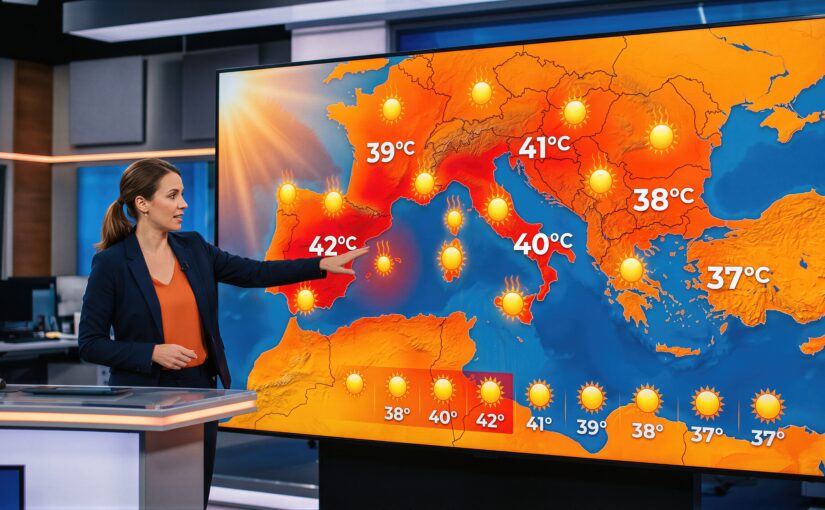
Extreme weather is becoming a serious business continuity issue for UK companies. Heatwaves, storms, heavy rain, travel disruption and uncomfortable working conditions can all affect how businesses operate. What used to be treated as a short-term inconvenience is now becoming something businesses need to plan for more carefully.
For many organisations, the challenge is not only the weather itself. It is what the weather disrupts. Staff may struggle to commute, clients may postpone meetings, rail services may be affected, offices may become difficult to use, and important business mail may be delayed or overlooked. In these situations, businesses need practical systems that help them keep moving.
This is where flexible workspaces and digital mailrooms are becoming more important. Services from BluDesks and LowCost LetterBox can support businesses that want to stay professional, responsive and operational when extreme weather disrupts normal routines.
Extreme Weather Is Now a Business Planning Issue
The UK has experienced more visible extreme-weather disruption in recent years. Heatwaves can affect health, transport, offices and daily routines. Heavy rain and storms can disrupt journeys, delay meetings and affect access to buildings. The UK Health Security Agency has also issued heat-health alerts across England during periods of extreme heat, showing how weather can affect wider public services and daily life.
The Met Office explains heat-health alerts as a system designed to highlight the potential impact of heat on health, especially for vulnerable groups. For businesses, this matters because health alerts can influence staff availability, commuting decisions, workplace safety and customer behaviour.
Business continuity is no longer only about IT backup or emergency procedures. It is also about whether a business can continue serving customers, managing communication and supporting teams when normal working patterns are interrupted.
Transport Disruption Can Quickly Affect Productivity
One of the clearest business impacts of extreme weather is transport disruption. During hot weather, rail networks can be affected by track expansion, signalling problems and speed restrictions. National Rail explains that steel rails can become much hotter than air temperature, which may affect how services operate.
Network Rail also explains that extreme heat can affect signalling equipment and railway infrastructure. Businesses may not control rail services, but they do need to consider how transport delays affect staff, clients, suppliers and scheduled meetings.
When staff cannot reach the main office easily, a single fixed workplace can become a limitation. Teams may lose time travelling across the city or waiting for delayed services. Client meetings may become harder to coordinate. A business that depends only on one location may find it difficult to respond quickly.
Flexible workspace gives businesses another option. With BluDesks flexible workspaces, companies can access professional environments when and where they need them. This helps reduce dependency on one office and gives teams more choice during disruption.
Flexible Workspaces Help Teams Stay Operational
Extreme weather often creates uncertainty. Some employees may need to work closer to home. Others may need a professional space between meetings because travel takes longer than expected. Managers may need to bring a small team together without asking everyone to travel to the usual office.
This is where flexible workspace becomes valuable. A company may not need a permanent office in every location, but it may still need access to desks, meeting rooms or coworking space when conditions change.
For example, a business could use hot desks for staff who need a temporary professional workspace during a period of transport disruption. It could use coworking spaces when a small team needs to work together for the day. It could also book meeting rooms when client discussions cannot be delayed.
This approach supports business continuity because it gives companies practical alternatives. Instead of cancelling work or relying only on home working, businesses can choose workspace that fits the situation.
Home Working Is Useful, But Not Always Enough
Many businesses use home working as a backup when travel becomes difficult. This can work well in some cases. However, extreme weather can also make home working less reliable. During heatwaves, some homes may become uncomfortable. During storms or heavy rain, internet reliability, childcare arrangements or household disruption may affect productivity.
Not every employee has a quiet, cool or suitable home office. Some may share space with family members. Others may need a professional environment for calls, focused work or meetings. That means businesses should not rely on home working as the only continuity plan.
A stronger approach is to combine remote working with flexible workspace access. This gives staff more options and helps businesses keep work moving, even when normal travel or office arrangements are affected.
Digital Mailrooms Reduce Office Dependency
Extreme weather does not only affect where people work. It can also affect how businesses manage communication. Important letters, compliance documents, invoices, supplier notices and customer correspondence still need to be received and handled properly.
If staff are away from the office, travelling less or working across different locations, physical post can easily be missed. A delayed or unopened letter could lead to missed deadlines, payment issues, compliance concerns or unnecessary stress.
This links closely with a previous LowCost LetterBox article, “Could a Missed Business Letter Cost You More Than You Think?”, which explained how overlooked business correspondence can create avoidable problems.
With LowCost LetterBox digital mailroom services, businesses can reduce dependency on one physical office. Incoming mail can be received, scanned and managed digitally, helping teams access important correspondence even when they are working remotely or dealing with travel disruption.
Professional Addresses Support Continuity and Privacy
Extreme weather also highlights the value of having organised business infrastructure. If a business relies on a home address or an informal mail arrangement, disruption can quickly create confusion. Important letters may arrive when the business owner is away, travelling is difficult or the home environment is not suitable for business administration.
A professional business address can help create a more stable communication process. It gives businesses a consistent address for official correspondence while reducing the need to expose a residential address.
This connects with another previous LowCost LetterBox article, “Can I Use My Home Address for a Limited Company in the UK?”, which explored why business owners may want to separate personal and business addresses.
For companies looking to create that separation, LowCost LetterBox registered office address services can support privacy, professionalism and continuity. During periods of disruption, that kind of structure can make business communication easier to manage.
Agility Is Becoming Part of Business Resilience
The businesses that respond best to disruption are often not the ones with the most fixed infrastructure. They are the ones with flexible systems. They can adjust quickly, support staff in different locations, maintain communication and continue serving customers.
This reflects a wider shift in business thinking. In a previous article, “Why Businesses Are Choosing Agility Over Ownership”, we explored how modern businesses are becoming more selective about what they own, outsource or access only when needed.
Extreme weather makes this mindset even more relevant. A business does not always need to own every piece of infrastructure. It needs reliable access to the right support at the right time. Flexible workspaces and digital mailrooms both fit this approach.
How LCLB and BD Help Businesses Prepare
LowCost LetterBox and BluDesks support different parts of the same business continuity challenge. BluDesks helps businesses access professional workspace without long-term office commitments. LowCost LetterBox helps businesses manage official correspondence, registered office needs and digital mail handling without relying on one physical office.
Together, these services help businesses answer important continuity questions. Where can staff work if commuting is disrupted? Where can a client meeting take place if the usual office is not practical? How can important post be accessed if staff are remote? How can a company maintain a professional presence without unnecessary fixed overheads?
These are not only questions for large organisations. They matter to startups, consultants, SMEs, overseas business owners, hybrid teams and remote-first companies. Extreme weather can affect any business, so practical preparation matters.
Final Thoughts
Extreme weather is becoming a bigger part of business planning in the UK. Heatwaves, storms, heavy rain and transport disruption can affect staff, meetings, mail, productivity and customer service. Businesses that rely too heavily on one fixed location may find it harder to adapt when normal routines are interrupted.
Flexible workspaces provide a practical way to keep teams working, meet clients and access professional environments when needed. Digital mailrooms help ensure important correspondence is received, scanned and managed even when staff are not in one office.
For businesses that want to build a more resilient operating model, BluDesks and LowCost LetterBox offer practical support. One helps businesses access the right workspace when disruption changes the working day. The other helps businesses keep communication organised through registered office, business address and digital mailroom services.
As extreme weather becomes more visible, business continuity should become more practical too. The goal is not to predict every disruption. It is to create flexible systems that help the business continue operating when the unexpected happens.
For further guidance on weather-related disruption, businesses can review the UKHSA heat-health alert update, the National Rail hot weather guidance, and Network Rail’s explanation of hot weather and the railway.
Popular Posts
 What Makes a Registered Office Address “Appropriate”?24th September 2026
 Can You Remove Your Home Address from Company House ?18th September 2026
 The Hidden Cost of Poor Mail Handling for UK Companies !10th September 2026